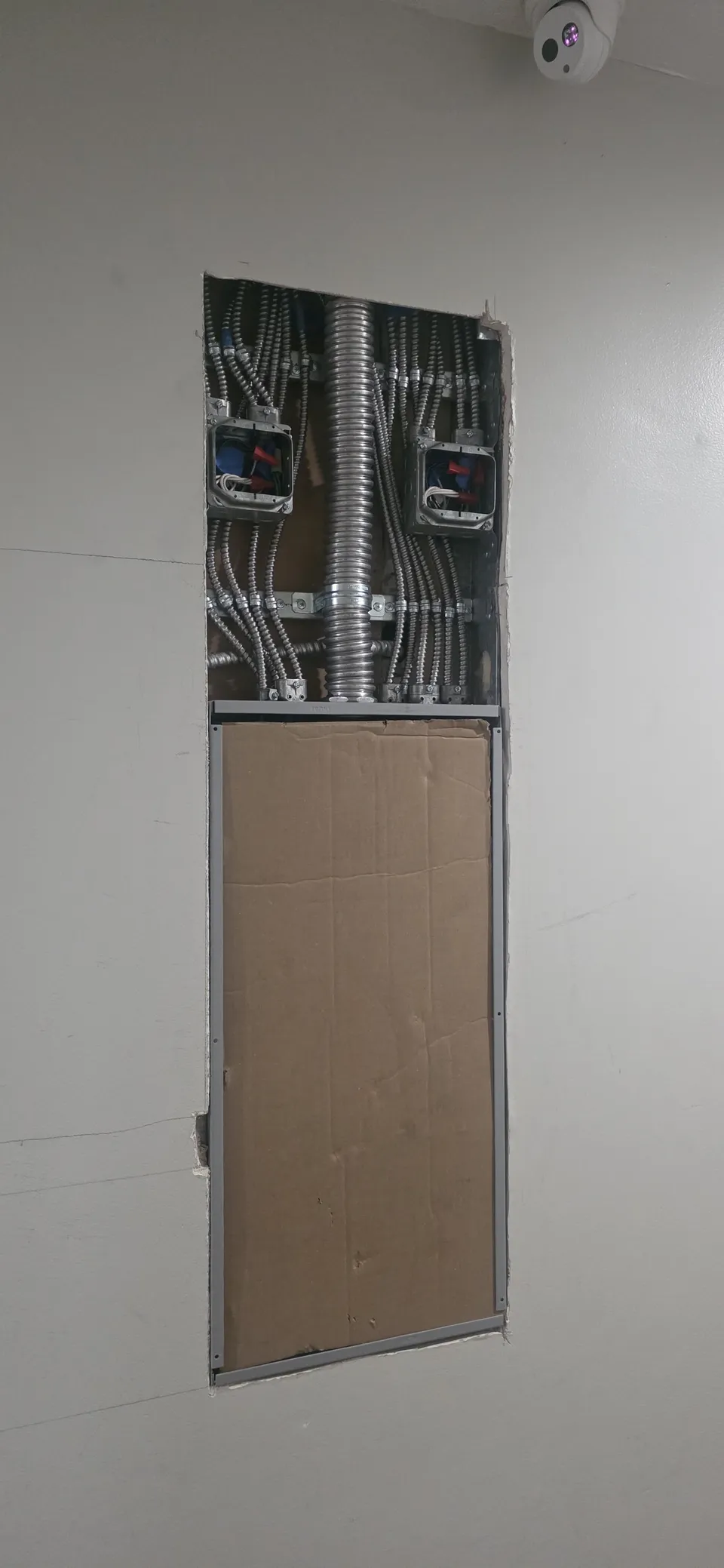
Planning
We review scope, existing conditions, equipment, code requirements, access, and future needs before work begins.

Overview
Two-way communication systems provide communication between designated building locations and a staffed or master station during an emergency. These systems require coordinated device locations, pathways, power, supervision, and integration with the building's life-safety design.
We coordinate device locations, accessible mounting, cable routes, head-end or master-station locations, power, equipment requirements, testing, and the engineered life-safety design.
Why Ampere
We review scope, existing conditions, equipment, code requirements, access, and future needs before work begins.
Work is completed with attention to clean routing, reliable connections, code compliance, and coordination with surrounding finishes.
We test and review completed systems and make sure the finished work is ready for normal use and future service.
Process
Confirm project goals, site conditions, existing equipment, and constraints.
Define scope, materials, routing, scheduling, and permit requirements where applicable.
Complete the work safely and coordinate with finishes, equipment, and other trades.
Verify operation, review the completed work, and address final details.
Common Questions
They are commonly used in life-safety applications such as areas of refuge or designated emergency communication locations, depending on the building and applicable requirements.
Systems can include call stations, master stations, power supplies, supervised cabling, annunciation, and other equipment depending on the selected design.
Yes. We can coordinate and install the pathways, cabling, device locations, power, and supporting infrastructure based on the project design.